
Author: Tomfon Ngangyet
Across the Meta region, agriculture has always been more than a livelihood—it is the backbone of rural life, culture, and economic survival. From fertile farmlands and hardworking farmers to vibrant local markets, Meta possesses enormous untapped potential. Yet for decades, one critical gap has limited growth: the weak link between production and market access.
Building sustainable rural economies in Meta requires intentionally connecting what our people produce to where value is created—markets, processing centers, storage facilities, and regional trade networks.
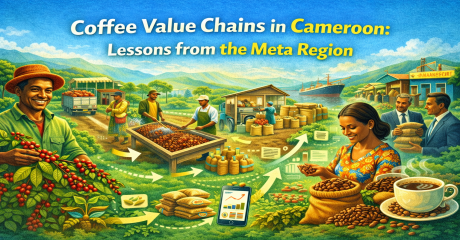
Meta farmers produce palm oil, coffee, maize, cassava, vegetables, livestock, and other staples in significant quantities. The challenge is not production—it is what happens after harvest.
Without adequate storage, processing, and reliable market access:
Produce is sold cheaply at farm gates
Post-harvest losses remain high
Farmers stay trapped in subsistence cycles
True rural development begins when production is linked to value addition and fair pricing.
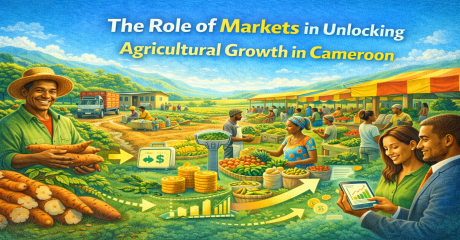
Local markets are not just trading points—they are economic engines. When markets function well, they:
Create demand certainty for farmers
Encourage increased production
Support traders, transporters, and artisans
Circulate income within the community
Strengthening Meta markets—through access roads, organization, transparency, and security—directly strengthens rural incomes.
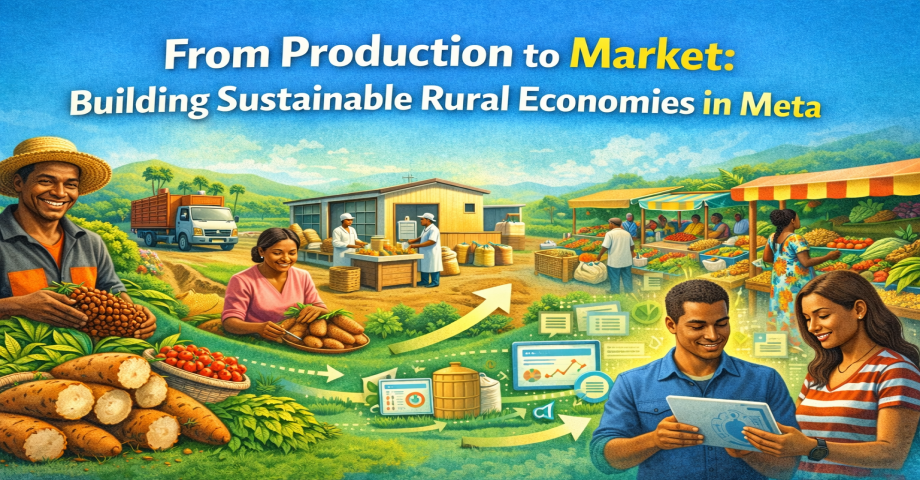
A sustainable rural economy looks beyond farming to the entire value chain, including:
Input supply (seeds, tools, training)
Production
Storage and aggregation
Processing and packaging
Transportation
Wholesale and retail markets
When Meta communities organize around value chains instead of isolated farming, agriculture becomes a business, not a struggle.
No rural economy can thrive without basic infrastructure. Poor roads, lack of storage facilities, and limited processing equipment increase costs and reduce competitiveness.
Sustainable rural development in Meta depends on:
All-season feeder roads linking farms to markets
Community storage and aggregation centers
Small-scale processing units owned or co-managed locally
Infrastructure investment is not charity—it is economic strategy.
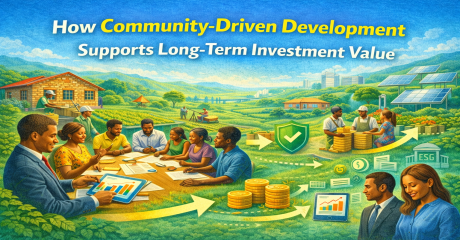
Top-down projects often fail because they exclude local voices. In Meta, sustainable rural economies must be community-owned and community-driven.
When farmers, traders, traditional leaders, youth, and women are involved in decision-making:
Accountability improves
Maintenance culture strengthens
Conflicts reduce
Long-term impact increases
Development lasts when people feel ownership, not dependency.
Digital platforms are beginning to reshape rural economies by:
Connecting farmers directly to buyers
Improving price transparency
Facilitating cooperative savings and investments
Enabling record-keeping and planning
For Meta, digital tools can bridge the rural-urban divide and unlock regional and diaspora markets—if used responsibly and transparently.
Sustainable rural economies must offer young people opportunity and dignity. Agriculture linked to markets creates:
Jobs in logistics, processing, and marketing
Opportunities for agri-entrepreneurship
Reasons for youth to stay, invest, and innovate
Without youth, rural economies decline. With youth, they multiply.
Building sustainable rural economies in Meta is not about isolated projects—it is about systems. Systems that connect production to markets, farmers to infrastructure, and communities to opportunity.
When Meta moves from raw production to organized value chains, agriculture becomes a path to prosperity rather than survival. The journey from farm to market is the journey from poverty to possibility—and Meta is ready to take that step.
The future of Meta’s rural economy lies not only in what we grow, but in how we connect, manage, and value it.