
Author: Tomfon Ngangyet
Coffee has long been one of Cameroon’s most important cash crops, contributing to rural incomes, export earnings, and livelihoods across the highland regions. Yet despite its potential, Cameroon’s coffee sector has struggled with declining production, low farmer incomes, and weak global competitiveness.
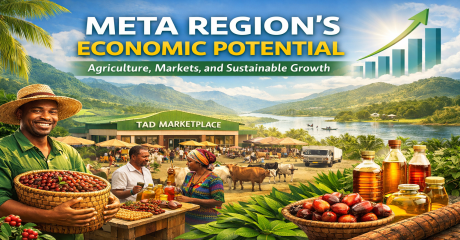
The Meta Region offers valuable lessons on how strengthening coffee value chains—from farm to market—can revive the sector, empower rural communities, and restore coffee as a pillar of sustainable development.
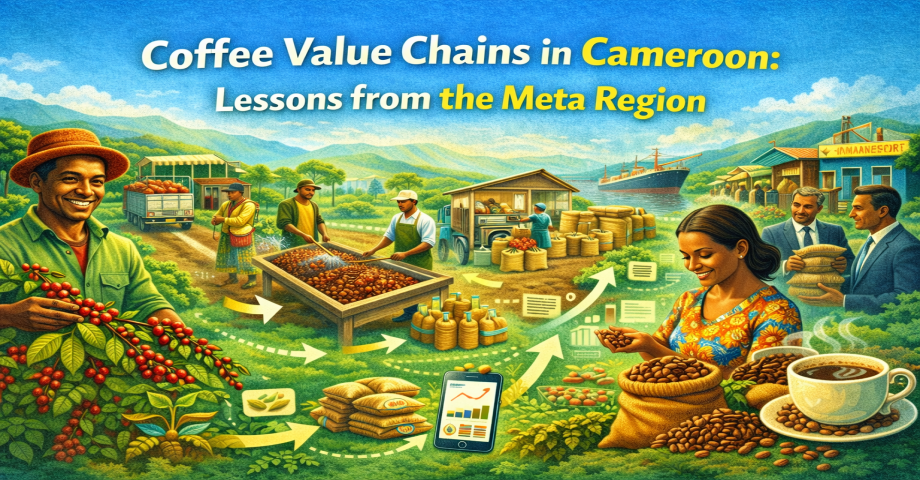
A coffee value chain includes all activities involved in bringing coffee from production to final consumption. In Cameroon, this typically covers:
Input supply (seedlings, fertilizers, tools)
Coffee production by smallholder farmers
Harvesting and primary processing
Drying, storage, and aggregation
Marketing, export, and retail
Weakness at any stage affects the entire chain. The experience of Meta shows that coordination and organization matter just as much as production volume.
The Meta highlands possess favorable conditions for Arabica coffee:
Cool temperatures
Fertile volcanic soils
Long-standing farming knowledge
However, farmers face persistent challenges:
Aging coffee trees and limited replanting
Inconsistent access to quality inputs
Low farm-gate prices
Limited extension services
Despite these challenges, Meta farmers continue to produce quality coffee—often without capturing its full value.